Kotlin Under the Hood: Extension functions
All of you probably noticed how fast utils folders grow in newly created projects. Some developers have templates for starting projects where they hold some Gradle tasks or basic project structure. Eventually, among them, you can find util classes for closing keyboard and so on.

We hold their helper methods which are needed to fulfill missing features from the original API.
Let’s say we want to create a very useful util method for converting density-independent pixels(dp) into pixels(px). In Java we can create the following method:
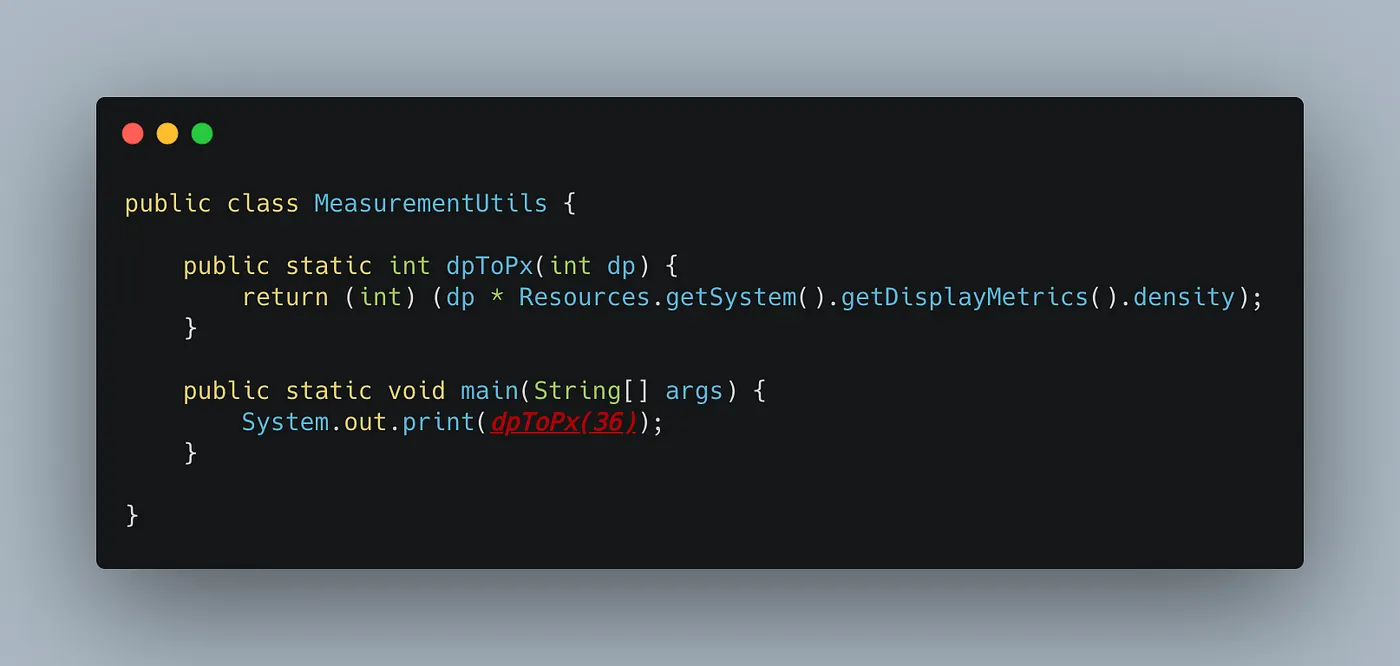
We need a class for it as Java doesn’t allow top-level functions and we have a static method with one parameter. It’s ok, but take a look at the red piece of code. I don’t like the way we call this method. It creates “abstraction” over integer and extends its API.
What if we could add this method to integer implementation? In Kotlin we could simulate it:
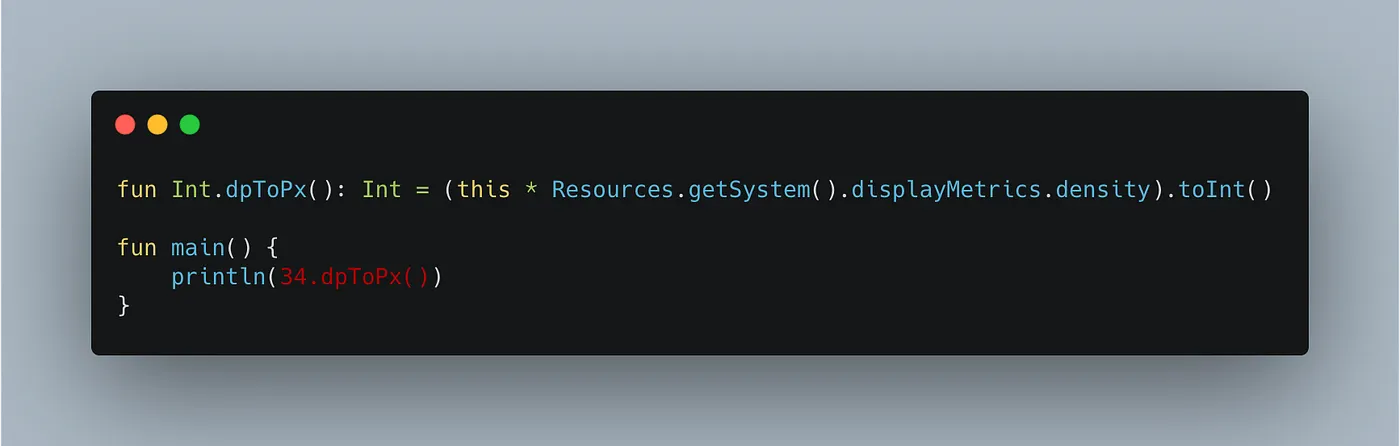
We’ve created an extension method for the Int class and in the main method we called the conversion method as if it existed inside Int API. Looks very handy. We got rid of parameters, unnecessary class, and this code makes us feel as we are working with a density-independent pixel instance and call its own method. Perfect!
But technically this code doesn’t insert any method into Int class:
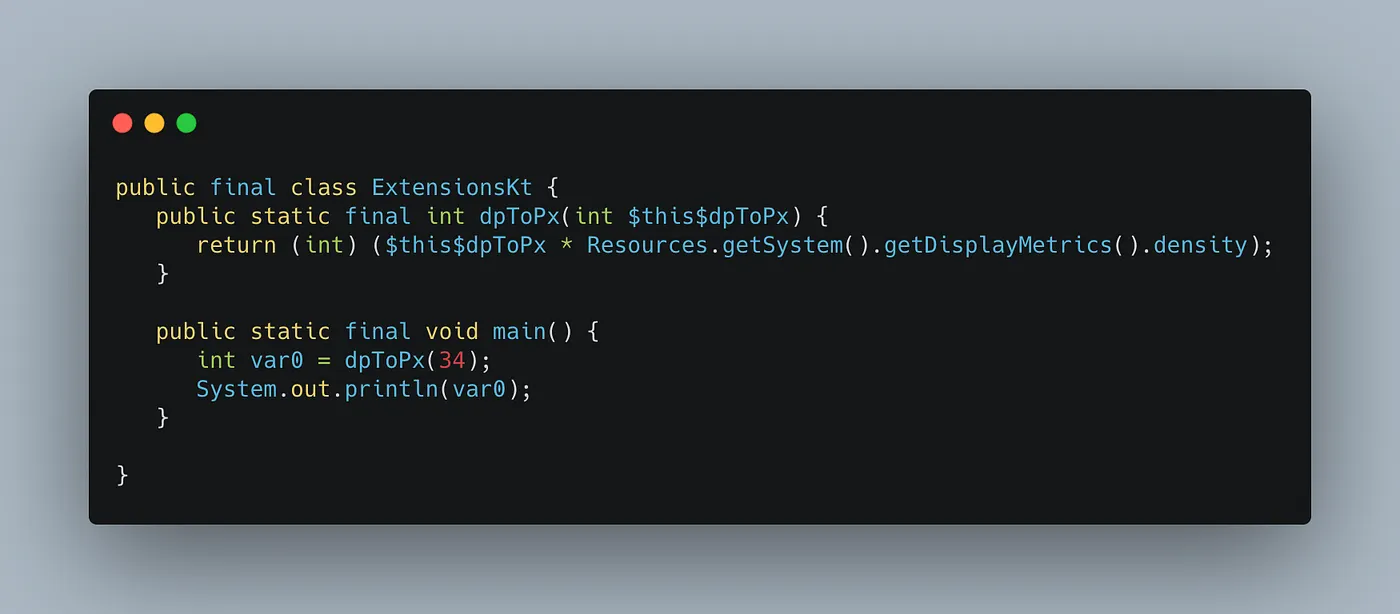
As always, I simplified generated code a bit and you might notice that it generates the same code as we wrote in Java but makes our extension function static final. So, this extension is just syntactic sugar.
Also, in Kotlin’s version, we didn’t create any class and used a top-level function. In generated code we see a created class named {filename + Kt}.
Must know facts
- private members of the receiver class can’t be accessed inside the extension function.
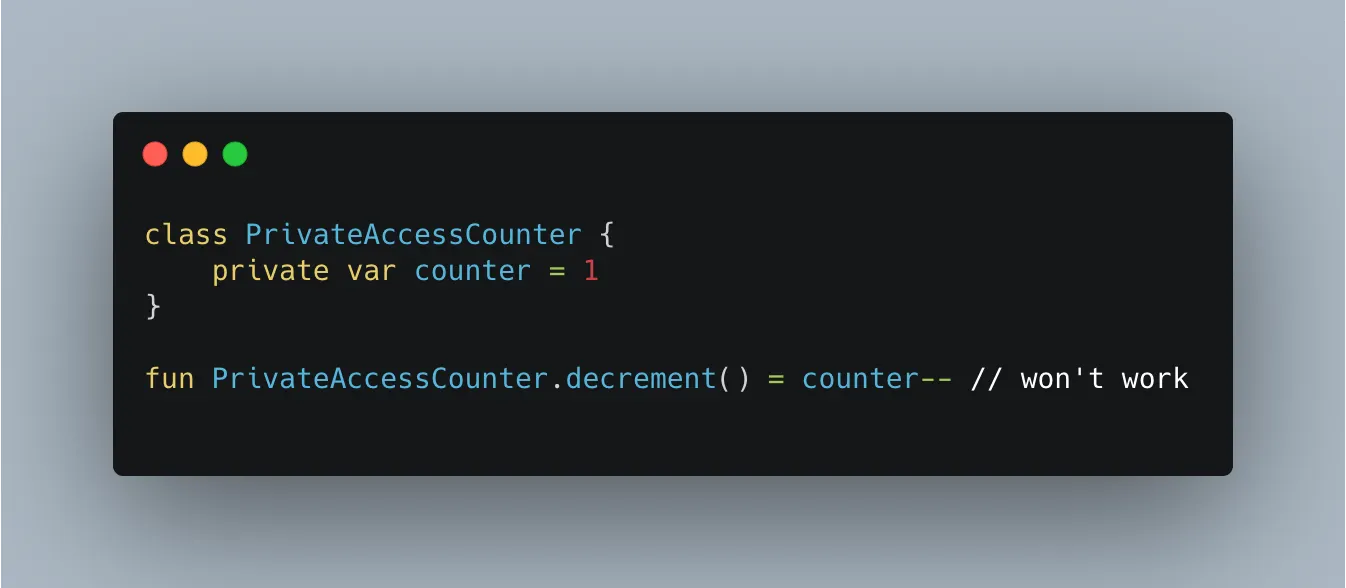
That’s because we do not insert any code inside PrivateAccessCounter class by creating the extension function. Under the hood, we just create a static method that uses this class.
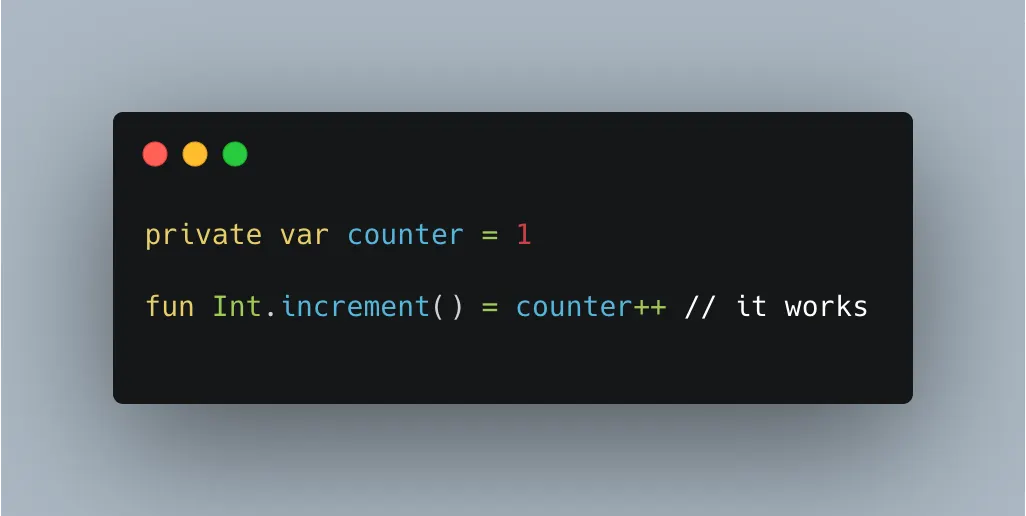
- private members defined inside the same file or class as extension function can be accessed:
- In line with functions you can extend Companion objects and add them some methods, properties, nullable types.
Let me know if you have any questions — I’ll be happy to address then in future articles. If it was helpful, feel free to follow me here or on LinkedIn.